
A small book with big ideas for a sustainable world
A book review of The Serviceberry by Robin Wall Kimmerer
3/24/20263 min read
Book Review: The Serviceberry, Abundance and Reciprocity in the Natural World Author: Robin Wall Kimmerer
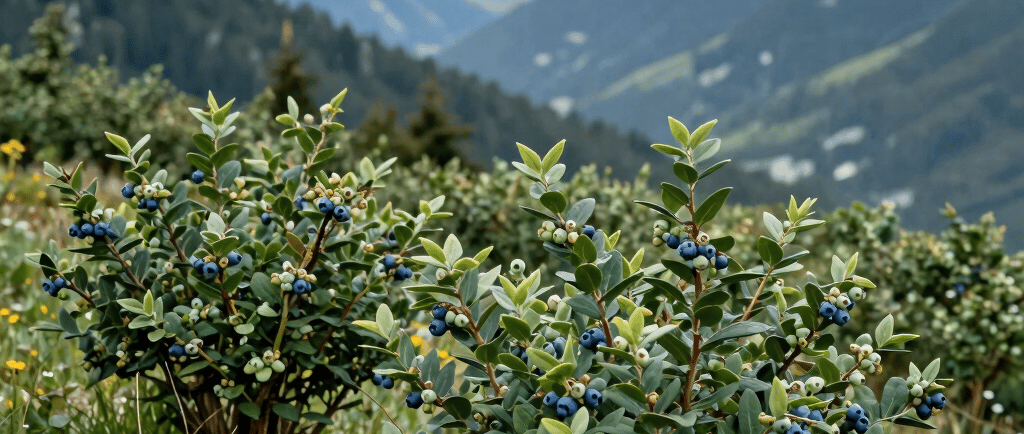
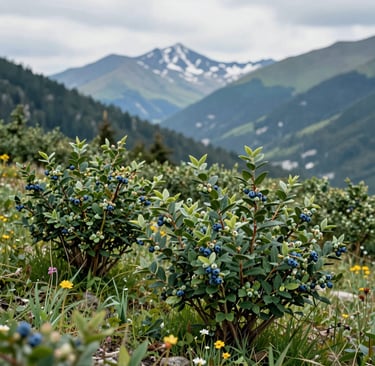
I recently received Robin Wall Kimmerer’s book, The Serviceberry as a gift. A friend passed the book on to me shortly after reading it. She knows I am a certified Shinrin-yoku guide and was excited for us to discuss the book. This is not an unusual occurrence in our friendship. We often share books, eat meals together sourced from our gardens and forage for wild blueberries along nearby mountain paths.
I noticed as I read, that Kimmerer's description of this kind of natural commerce with each other is something my friends and I have been doing on a small scale for years.” She asks the question, “Can we imagine a human economy with a currency which emulates the flow from Mother Earth? A currency of gifts?”(2024, p. 14)
She uses the serviceberry bushes growing near her home as an example of how nature can show us a way to reimagine our current economy and create one that mimics the relationships found in nature—one that shows how more than humans must thrive for us all to flourish.
The book is both hopeful and inspiring. At its core it’s about gratitude and reciprocity between ourselves and the natural world. When I receive a gift, I feel a desire to give something back. Not out of a sense of debt, but instead out a sense of gratitude and joy for the gift I was given. I am deeply grateful for my garden that grows such delicious tomatoes. So, I carefully separate seeds from the pulpy flesh of the largest fruit, lay them out to dry in the warm sunshine and then carefully store them in envelopes to share with friends. Where there was one fruit, soon there will be many. Gratitude and reciprocity feed this economy. I sense the possibility of such abundance.
We see other examples of this reciprocity after natural disasters when many rush in to help their neighbors. Volunteer organizations abound as a way to fill the gap left by our market economy. What if a gift economy took center stage and the market economy filled the gap? Kimmerer’s invitation asks us to consider a mosaic of economies where we shift toward the idea that we belong to the land instead of the land belonging to us.
This transformation would require a shift in the level of connection and appreciation most of us have with the natural world. One that Shinrin-yoku is already working to create. Invitations to consider the concepts of interdependence, abundance, cooperation vs. competition and biomimicry might facilitate the transition between what is now and what is possible.
Kimmerer (2024) concludes her slim book by telling us change is coming.
Regenerative economies that reciprocate the gift are the only path forward. To replenish the possibility of mutual flourishing, for birds and berries and people, we need an economy that shares the gifts of the Earth, following the lead of our oldest teachers, the plants. They invite us all into the circle to give our human gifts in return for all we are given. How will we answer? (p. 105.)
I noticed the similarity between her ideas and what the forest already does so perfectly. Scientists who study forest succession know that after the initial colonizing phase, the forest enters a phase of competition for resources which continues until a critical point is reached. This state leads to the reaction phase where a modification of the environment occurs, that ultimately leads to the final stage, stability.
This model gives me hope. Hope that our return to nature for restoration and connection with something more than ourselves can be a part of the transformation that leads to a place of stable sustainability.
That is only way to see Kimmerer's economy into being. Another way is still in the oven. I’m hoping the blueberry cobbler bubbling away in there brings my friend just as much pleasure as this book has given me.
Reference List
1. Kimmerer, R. (2024). The Serviceberry Abundance and Reciprocity in the Natural World. Scribner an imprint of


"I don't ask for the sights in front of me to change, only the depth of my seeing..." - Mary Oliver
© 2026. All rights reserved.
earthforapillow@gmail.com